Whether you’ve filed a claim for a new rating or a VA disability increase to an existing rating, the waiting game is one of the most frustrating parts of the whole process. The weeks pass, the status screen seems to refresh without actually changing, and you’re left wondering whether anyone is working on your file at all.
There’s a better approach. Knowing where to look, what the status language actually means, and when to take action versus when to stay patient removes a lot of the uncertainty that comes with tracking a claim. That uncertainty is where veterans lose the most energy, and it doesn’t have to be that way.
Here’s how to follow your VA claim or appeal from submission through decision.

How to Check Your Claim Status on VA.gov
VA.gov is the primary hub for tracking both original disability claims and appeals. Here’s how to navigate the site:
- Sign in to your account
- Navigate to “Disability” under the Benefits section
- Select “Check your claims and appeals status”
- Check out each of your active claims. The update should include the date each claim was submitted, the current status phase, and the estimated completion date.
- Note any changes in phase and write down any reference numbers and new dates the system gives you. That documentation becomes useful if you need to follow up by phone or in person down the road.
The claim status tool organizes the review process into five phases:
- Claim Received
- Initial Review
- Evidence Gathering and Review
- Preparation for Decision
- Complete
Each phase includes a brief description of what’s happening to your file. The tracker doesn’t show every internal step a rater takes, but it gives you enough visibility to know where your claim stands and whether it’s progressing.
Check your status once a week rather than every day. Checking in too often can create anxiety without producing new information. Status updates on VA.gov don’t always reflect real-time progress. A claim can advance internally without triggering a visible status change on your end. No update on your screen doesn’t mean your file is sitting untouched.
On the other hand, not checking in enough can delay your claim. That’s because during the evidence-gathering process, the VA may notice gaps in your file and ask you to provide new evidence. The last thing you want to do is miss those requests and be the bottleneck for your own claim.
Understanding VA Terminology and Timelines
The VA review process can be hard to wrap your head around. The terminology can be confusing and the timelines unclear.
“Evidence Gathering, Review, and Decision” is the longest and most active phase. This is when the VA collects your medical records, schedules your compensation and pension exam (C&P exam), and reviews what’s in your file. Claims can sit in this phase for weeks or months, depending on complexity, backlog, and how many records the VA needs to pull together.
“Preparation for Decision” doesn’t necessarily mean a decision will come right away. It simply means a rater is actively working your case. It signals that the evidence gathering is complete, and the focus has shifted to evaluating what’s there. This phase tends to move faster than the evidence phase, but it can still take several weeks depending on the rater’s workload.
“Complete” means a decision has been made and is either being processed for mailing or has already been sent. Watch your mail carefully once your claim reaches this phase, and log in to VA.gov to view the digital decision letter.
Other Ways to Stay Informed
VA.gov isn’t the only way to check on your claim or appeal. Several other channels give you direct access to your case status.
The VA Benefits Hotline at 1-800-827-1000 connects you with a VA representative who can confirm your claim status, verify that submitted documents were received, and answer general questions about where your case stands. Waits can be long, but there is a callback option. The hotline is worth using when you need specific information that VA.gov doesn’t surface in the tracker.
Your local VA Regional Office (VARO) is another option, particularly when your claim has been in the same status phase for an extended period. Be sure to make an appointment before going. A VARO visit gives you direct access to staff who can look at your actual file, identify missing documentation, and explain what’s causing a delay.
Veterans Service Organizations (VSOs) offer free representation and can track claims through channels that aren’t available through the public-facing portal. A VSO-accredited claims agent can review your file on your behalf and flag issues that may not be visible to you through the standard tracking tools.
Private veterans disability consulting services can also help you monitor your claim and file a strong appeal if you are denied.
When to Stop Watching and Start Moving
Tracking a claim and taking action on a claim are two different things. A claim stuck in the same status phase beyond the VA’s published processing times warrants a follow-up. Call the VA Benefits Hotline or visit your VARO to confirm your file is active and to check whether any documentation gaps are creating a hold on the review.
If the VA requests a C&P exam, don’t just wait for the exam date; use the time to prepare. Be ready to describe how your condition affects your personal and professional life. Don’t sugarcoat your condition or say that you’re fine. The reviewer will want to get an idea of what your worst day looks like. If it helps, write down notes and reference them during the exam to keep the discussion on track.
Bring hard copies of your medical records and know what’s in them. (The reviewer may not have access to your full record.) You should also bring a list of your current medications.
The reviewer will use a specific Disability Benefits Questionnaire (DBQ) to guide the exam. Before the appointment, look up the DBQ related to your condition so you know what your reviewer is assessing.
If you don’t agree with your rating decision, don’t give up. You have one year from the date of the decision to file an appeal, whether through filing a Supplemental Claim, requesting a Higher Level Review, or filing a formal Board appeal. (Hint: The first two options are usually the most efficient.)
Track the Progress. Own the Outcome.
Staying informed about your claim isn’t a passive activity. The veterans who move through this process most effectively know where their claim stands, understand what each status update reflects, and act decisively when something needs attention.
Need assistance staying ahead of your claim or help with a VA disability appeal? Reach out for a free strategy call.
Video

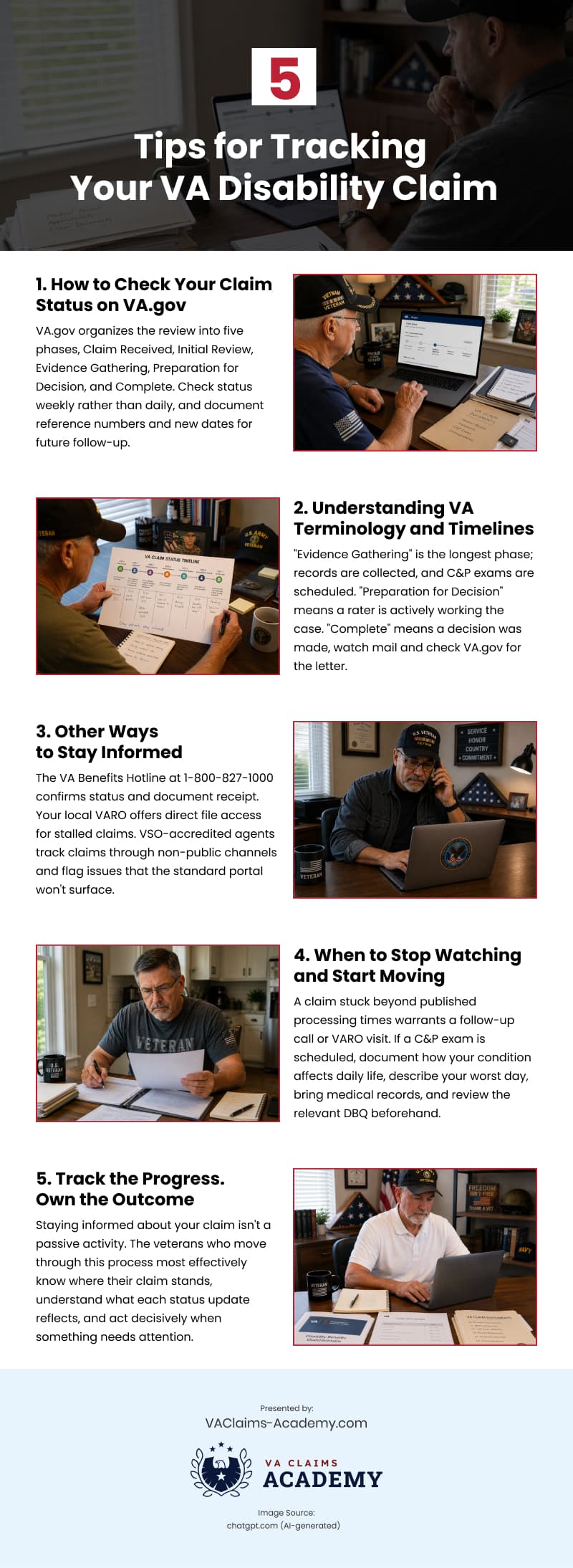
Infographic
Tracking a VA disability claim requires more than checking a screen and waiting; it requires understanding what each status phase means and knowing when passive monitoring needs to become active follow-up. Explore tips for tracking your VA disability claim in this infographic.