38 CFR § 4.71a (Schedule of Ratings – Musculoskeletal System)
If you have scoliosis and it causes chronic back pain, stiffness, reduced mobility, or nerve symptoms, you may wonder how the VA handles your claim. The answer starts with an important point: the VA does not usually rate scoliosis by name alone. It looks at how the condition affects your spine and what limits it creates in your daily life.
Your claim is stronger when you focus on function, symptoms, and documented limitations instead of relying on the diagnosis by itself. The VA wants to see how your scoliosis connects to service and whether it affects your movement, posture, and nerve function enough to justify compensation.

(Funkcinės Terapijos Centras/pexels)
What The VA Actually Rates In A Scoliosis Claim
The VA rating for back pain falls under the General Rating Formula for Diseases and Injuries of the Spine. In practical terms, that means it looks at things like your range of motion, whether you have muscle spasms, whether your posture or gait is abnormal, and whether pain limits your ability to function.
If your scoliosis causes chronic low back pain, restricted bending, or severe spasms, those findings can shape your rating. If the curve in your spine contributes to compression or irritation of nearby nerves, the VA may also consider symptoms such as numbness, tingling, weakness, or pain that shoots into your leg. Those nerve problems may qualify for a separate rating.
This is where your records need to be specific. “Back pain” is too broad to carry a claim by itself. “Thoracolumbar scoliosis with painful limited motion and radiculopathy” gives the VA a clearer picture of what it is evaluating.
Why Range Of Motion Matters So Much
Range of motion is one of the most important components of a spine rating. During a Compensation and Pension exam, the examiner may measure how far you can bend forward, backward, and side to side. They may also note when pain begins and whether repeated movement makes things worse.
That means your exam is not just about whether you can technically move. It is about how pain, stiffness, fatigue, or flare-ups affect how you can move at home and at work. If you can bend once in an exam room but cannot repeat that motion without pain the rest of the day, that matters.
If you can still touch your knees during the exam, but standing for 15 minutes causes your back to tighten and leaning forward to tie your shoes becomes difficult, the VA needs to see that full picture. A strong exam report and treatment record should reflect both the range-of-motion measurement and the functional loss behind it.
Separate Nerve Symptom Ratings
Scoliosis sometimes causes more than mechanical back pain. If the curve or related spinal changes irritate nerves, you may develop symptoms that go beyond the spine itself. Radiculopathy is one of the most common examples. You may feel burning pain, numbness, weakness, or “electric” sensations in your hip, buttock, or leg.
The VA can assign a separate rating for those neurological symptoms if the evidence supports it. This is important because many veterans focus only on the spine rating and miss the secondary nerve component that can increase their total compensation.
Your records should clearly describe those symptoms. If your leg goes numb after sitting, your foot feels weak, or you get shooting pain down one side of your body, report this to your provider and make sure they document it. A vague complaint of “back pain with some leg issues” leaves too much open to interpretation.
Pre-Existing Scoliosis And Service Aggravation
Scoliosis claims can get more complicated when the condition existed before service. A pre-existing diagnosis does not automatically block compensation. You may still qualify if military service aggravated the condition beyond its normal progression.
This is where the evidence needs to do more work. You need to prove that your service made the condition worse in a measurable way. For example, you could show that repeated lifting, carrying heavy gear, airborne training, or long road marches put unusual stress on your spine. If your symptoms became more severe during service and stayed worse afterward, that can support an aggravation theory.
Service treatment records, profiles, complaints of worsening pain, and post-service medical findings all help here. A well-written nexus letter can be especially valuable if your service records don’t show a clear line between your military experience and the progression of your scoliosis.
A nexus letter can be written by your VA doctor or a private provider. It should explain that it is “more likely than not” that your military service aggravated your scoliosis-related back problems. This letter can show that it was your in-service duties—not the aging process or post-service events—that worsened your scoliosis.
What Evidence Strengthens This Type Of Claim
The strongest scoliosis-related claims usually come from records that tell one clear story. Your diagnosis, symptoms, and service history should line up in a way that makes the VA’s job easier. If the file looks scattered or incomplete, you leave too much room for delay or a low rating.
A few forms of evidence tend to help most:
- A current diagnosis. If you’ve been suffering without medical assistance, it’s time to see a doctor. Make an appointment today. Explain your symptoms. Make sure your provider documents your diagnosis (if it is not already in your records) and your ongoing treatment.
- Records linking the condition (or the aggravation of the condition) to military service. If your records do not support this link, get a letter from a VA or private doctor. Contact us for a list of VA nexus letter doctors who can assist you.
- Health records that show your condition worsening over time.
- Lay evidence like a personal statement. This brief statement should explain how your military service caused or worsened your scoliosis. (Don’t waste space talking about non-military stressors. They’re not relevant to the VA.)Your letter should also explain how your symptoms progressed over time and how they affect you on a daily basis. If the pain keeps you from sleeping on some nights, write that down. If you can’t pick up your kids or grandkids or do basic chores or yard work, note that as well.
Specifics help tell your story. A well-written personal letter can give the VA a clear picture of how your scoliosis affects you from day to day. And that detailed picture may help tip the scales in favor of a higher VA rating.
After you submit your claim, you will likely be called in for a Compensation and Pension (C&P) exam. Don’t go in cold turkey. Make sure you can articulate the connection between your military service and your back problems. Practice explaining your symptoms so your doctor can see how they affect your home and work life.
Think Like a VA Reviewer
Scoliosis can trigger pain and muscle fatigue that make your life miserable, but that narrative alone won’t be enough to get you the compensation you deserve. Think like the VA employee who is reviewing your case and consider what will make it easy for them to justify your rating.
Focus on diagnosed condition, service connection or aggravation, objective findings, and everyday limitations. Make sure your treatment notes are current. Prepare for your C&P exam with a clear understanding of your worst symptoms, flare-ups, and physical restrictions. If nerve symptoms exist, do not leave them in the background. When you prepare with your VA reviewer in mind, you can strengthen your claim and avoid leaving benefits on the table.
Video

Infographic
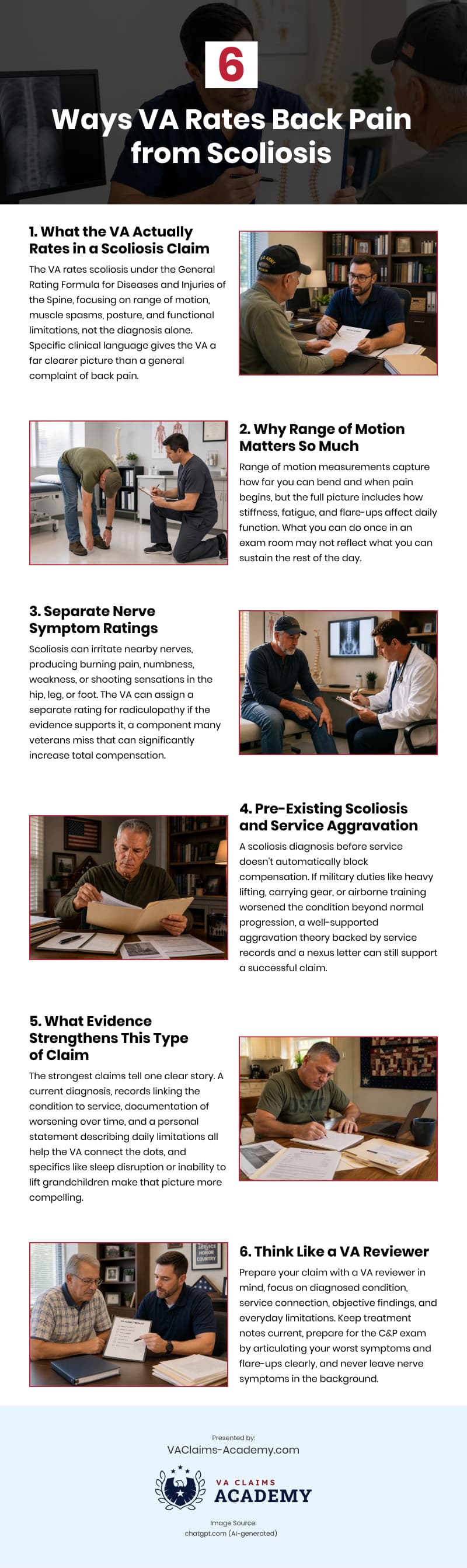
The VA rates scoliosis-related back pain based on functional limitations, nerve symptoms, and service connection, and understanding how that process works is essential to building a claim that reflects your full condition. Explore ways the VA rates back pain from scoliosis in this infographic.