If you’re living outside the United States, you might worry that your hard-earned VA benefits no longer apply. The good news is that many of your VA entitlements are still accessible, even if you’re halfway across the world from the U.S.
Whether you’ve retired to a quieter lifestyle abroad or followed work or family opportunities to distant countries, the Department of Veterans Affairs has programs in place to support you.
From disability compensation to healthcare and pensions, the rules might differ slightly outside the U.S., but you’re not left behind. In this article, our veteran consulting service experts weigh in on what’s available and how to navigate the system so you can maximize your benefits.

(freepik/Freepik)
Disability Compensation
One of the most important benefits you can still receive abroad is your VA disability compensation. If you’re already rated for a service-connected disability, you’ll be glad to know that the VA allows you to continue receiving monthly payments, even if you move overseas. Just make sure your address and direct deposit information are up to date with the VA or the U.S. Embassy’s Federal Benefits Unit in your region.
Also, make sure you understand how foreign-earned income and residency can affect taxes on your disability payments. While these payments are generally not taxable, some foreign financial institutions may handle funds differently or require extra documentation. Consider working with a tax advisor familiar with both U.S. and foreign laws to avoid unnecessary complications.
You should also be prepared for periodic reviews. The VA occasionally requests updates on your health status or living situation when you’re living abroad. If you don’t respond promptly, your payments could be delayed or suspended.
If you want to apply for a veteran disability pay increase, you can do this while living outside of the U.S. Much of this can be done online. If a Compensation and Pension Exam is required to determine your eligibility, you can usually arrange it with a local doctor or a traveling VA doctor, since there aren’t VA hospitals overseas.
Healthcare Options
VA healthcare eligibility does not automatically extend outside the United States in the same way it does domestically. The VA operates the Foreign Medical Program (FMP), which reimburses you for care related to your service-connected conditions while you’re living or traveling abroad.
To use the FMP, you must register beforehand. This step is critical. Without prior registration, your medical expenses may not be reimbursed, even if the treatment was related to a service-connected disability. Once you’re enrolled, you can visit local providers for treatment, pay out-of-pocket, and then submit claims to the FMP for reimbursement.
That said, you won’t be able to access VA hospitals overseas as you would in the U.S. There are no physical VA hospitals abroad, so you’ll have to do your homework to find quality healthcare in your host country. In countries with nationalized healthcare, you may find excellent care at lower costs, but always confirm that the treatment you’re receiving qualifies for reimbursement under the FMP guidelines.
VA Pensions and Survivor Benefits
If you’re receiving a VA pension—whether it’s a non-service-connected pension, Survivor’s Pension, or Dependency and Indemnity Compensation (DIC)—you can continue receiving those funds while living overseas. These benefits are sent by the U.S. Department of the Treasury and can be deposited into most foreign bank accounts that accept direct deposits.
However, you do have responsibilities to maintain eligibility. You must file an annual income report (VA Form 21P-0510 series) and keep your personal and banking information current. If you’re a survivor receiving benefits, notify the VA promptly if any of your qualifying criteria change, such as your marital status.
Survivors and dependents living abroad can also apply for benefits just like they would in the U.S. You can work with the VA’s regional office responsible for foreign claims or the local U.S. embassy to get updated guidance.
Education and Training Benefits
Although the Post-9/11 GI Bill is primarily designed for use at approved U.S.-based institutions, there are accredited foreign schools where your education benefits can apply. If you’re considering higher education while living overseas—or if your dependents plan to study abroad—make sure the institution is VA-approved.
The VA maintains a list of foreign schools where education and housing allowances may be used. Keep in mind that housing stipends for foreign schools tend to be lower than domestic ones and are calculated based on the average cost of housing in the U.S.
Distance learning is also an option. You may choose to enroll in a U.S.-based online degree program while living overseas. However, if your program is exclusively online, the VA may reduce your monthly housing allowance, so be sure to weigh the benefits carefully.
Life Insurance and Burial Benefits
VA life insurance programs such as Veterans’ Group Life Insurance (VGLI) or Service-Disabled Veterans Insurance (S-DVI) remain accessible abroad as long as you keep up with premiums. If you have beneficiaries who live overseas, they can still receive death benefits, but you will likely need to present proper documentation, including proof of relationship.
As for burial benefits, the VA does not cover transportation of remains from foreign countries to the U.S. However, some burial benefits, such as headstones or markers, may still be available. Coordinate with the U.S. Embassy to learn about your options.
Doesn’t Apply: Home Loan Guaranty Benefit
If you’re hoping to use your VA loan to purchase a property abroad, you’ll need to reconsider. The VA Home Loan Guaranty is only valid for properties located within the United States, its territories, or possessions. Unfortunately, the VA will not back loans for properties in foreign countries, even if you’re a citizen living abroad full time.
Still, if you plan to maintain a residence in the U.S. while living part-time abroad, you might be able to use your VA loan for your stateside property. Just be aware that the VA typically requires the property to be your primary residence, not a rental or vacation home.
Pro Tip: Coordinate with the Foreign Benefits Unit
Throughout your time abroad, the VA’s Foreign Benefits Unit (FBU) will likely be your main point of contact. These offices, often located at U.S. embassies and consulates, handle a wide range of VA-related services, from helping with claims to facilitating benefit verifications and resolving payment issues.
They’re also the ones who help you stay in compliance with any required reporting or certification. If you haven’t connected with your regional FBU, it’s a smart idea to do so. They can guide you through submitting paperwork, resolving questions, and ensuring nothing falls through the cracks.
Planning Ahead to Protect Your Benefits
Living overseas as a veteran doesn’t mean giving up your benefits, but it does mean taking a proactive approach. You’ll need to understand the rules, stay in communication with the VA, and maintain all required paperwork. This might involve submitting forms by mail, updating your bank information regularly, or confirming eligibility with the FMP.
Internet access makes managing your VA profile easier than ever. With VA.gov, you can log in to your account from anywhere in the world to check the status of your benefits, submit documentation, and update your contact information. Many veterans also choose to keep a mailing address in the U.S. for convenience, either through a family member or a mail-forwarding service.
Video
Infographic
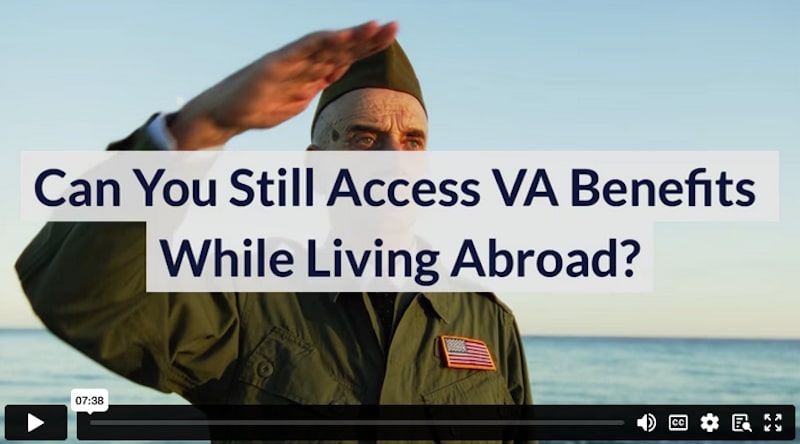
Living abroad does not mean losing access to your VA benefits—many key programs still apply, although some rules differ from those in the U.S. Explore this infographic for eight insights into VA benefits while living overseas.