Let’s say you get a VA rating for your back pain. You are happy with the rating and the compensation you’re receiving.
After a couple of years, you get a notice from the VA requesting that you come in for another compensation and pension (C&P) exam. You panic. Did the VA think you were faking the first time around? What if they take away your rating and the disability payment that goes along with it?
Re-examinations can be a routine part of the VA process. Your job is to understand if the re-examination is appropriate and, if it is, how to best prepare.

What Is the Purpose of a VA Re-Examination?
A VA re-examination is a follow-up C&P exam scheduled after you’ve already been granted a disability rating. Its job is simple: check whether your condition has stayed the same, improved, or gotten worse since your last evaluation.
The outcome can go three ways. Your rating could:
- Increase if your symptoms have worsened
- Decrease if there has been meaningful improvement
- Stay exactly where it is if nothing significant has changed
The VA isn’t accusing you of something. Rather, they are complying with protocols, which include periodic checks to make sure veterans’ ratings match their current reality.
When Is a VA Re-Examination Warranted?
The VA generally schedules a re-examination when there’s a reasonable basis to think your condition may have changed. Common triggers include:
- Medical evidence suggesting improvement. If recent treatment records hint that your symptoms have gotten better, that can prompt a review.
- A rating that wasn’t marked as permanent. If your original decision letter scheduled a future review date, expect that date to come with a re-exam notice.
- Less than five years of stability. Conditions that haven’t been rated as stable for at least five years are more likely to come up for review.
None of this means your claim is in trouble. It simply means your file fits the pattern the VA uses to decide who gets a routine check-in.
When a VA Re-Examination is NOT Warranted
Federal regulation lays out specific situations where the VA shouldn’t schedule a review exam at all. These include:
- Your disability is static (hasn’t improved significantly in the last 5 years)
- Your disability has been deemed “permanent” (not expected to improve)
- You are 55 or older
- Your rating is 10% or less
- Your combined rating would not change, even if the re-examination resulted in a reduced rating for one or more of your conditions
If you fall into one of these categories and still receive a re-exam notice, reach out to the VA or your representative and point out which exception applies to your case. Reference your prior rating decision if it noted your condition as static or permanent.
At the same time, don’t skip the exam while you sort this out. Missing a scheduled re-examination can lead to your benefits being reduced or stopped altogether, even if you believe the exam shouldn’t have been ordered in the first place. Attend the exam, then follow up afterward if you still believe the review was unwarranted.
How Is a Re-Examination Different From the Initial Examination?
The purpose of your first C&P exam was to make sure your disability was viable, connect it to your military service, and determine an appropriate starting rating. The examiner was building your case from scratch.
A re-examination works differently. The examiner already has your history in front of them. Instead of asking “does this condition exist and where did it come from,” they’re asking “has this gotten better, worse, or stayed the same since we last looked.” That means your examiner will compare your current symptoms, range of motion, treatment history, and functional limitations directly against what’s documented in your file.
How Do I Prepare for a VA Re-Examination?
A little preparation goes a long way toward making sure the exam reflects your condition.
- Pull together recent medical records. Bring or reference treatment notes from the last several months. These records reflect ongoing treatment and can show the VA that your condition hasn’t significantly improved.
- Write a short personal statement beforehand. You can reference this statement during the visit to keep your communications on track. The statement should describe your current symptoms and how they affect your daily routine.
- Be specific about your limitations. Describe the specific ways your disability changes your life. Don’t just say, “My back hurts.” Describe effects like: “My back hurts so badly I can’t focus at work or pick up my kids. It keeps me from sleeping at night. It’s been about six months since I’ve had a good night’s sleep because of my back pain.” This is not the time to whitewash your symptoms or play it tough. This is a time for honest details.
A re-examination notice can feel unnerving, but keep it in context. These exams are simply a way to show the VA that you continue to merit your disability rating. If you’ve been consistent with treatment and doctor’s appointments, you should have plenty in your medical record to support your current rating. And your honest communication at the exam can paint an even fuller picture of the toll your disability takes on your life.
Need more help preparing for your re-examination or determining if your exam is warranted? Contact our VA claims consultants today.
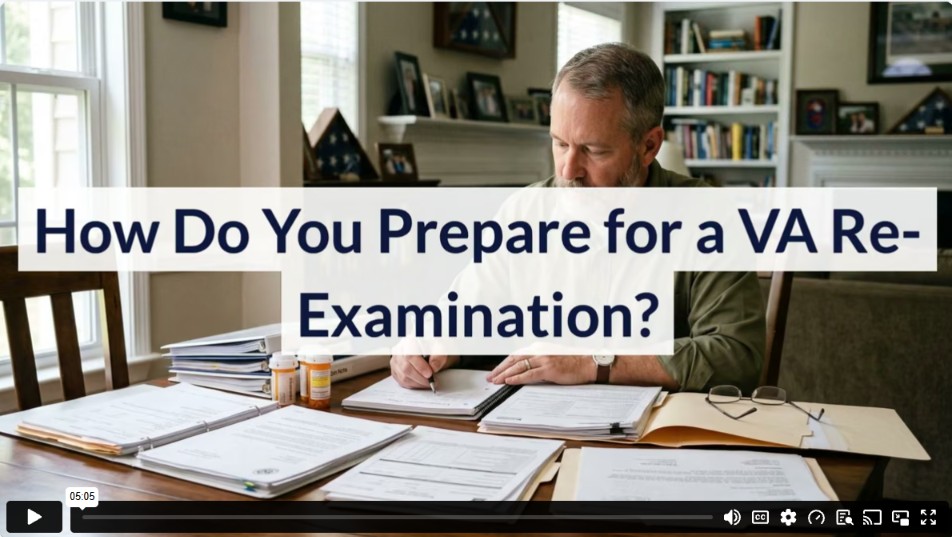
Video
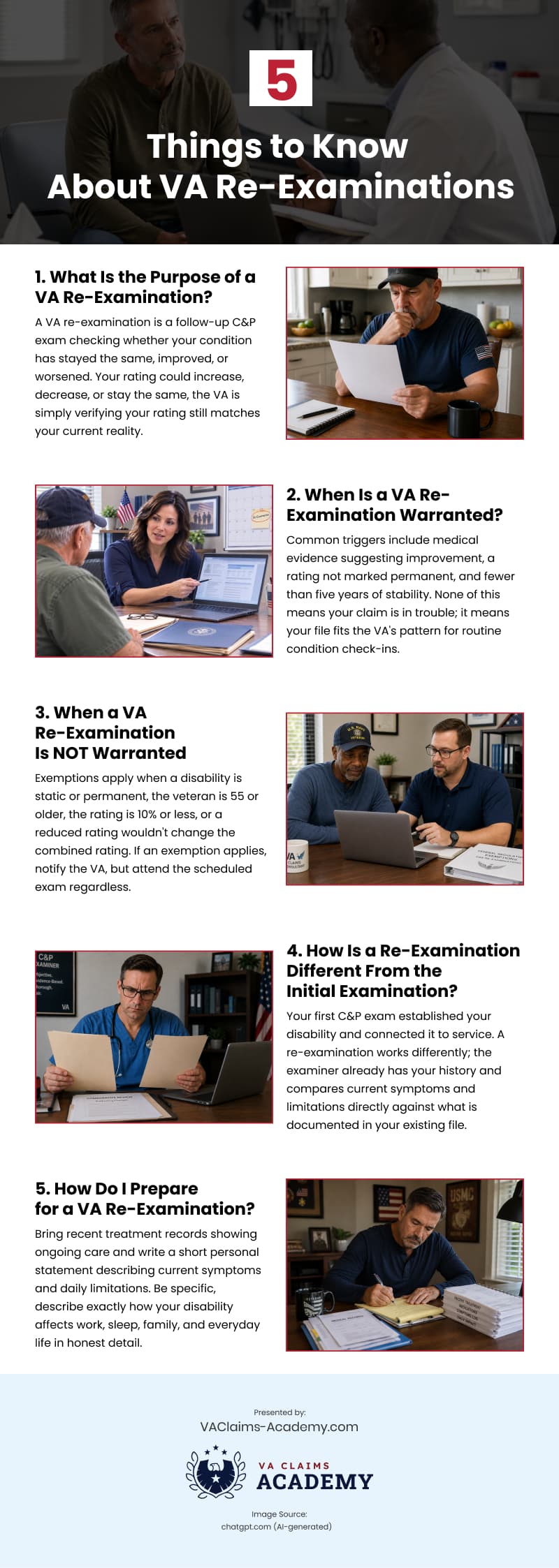
Infographic
A VA re‑examination notice may seem alarming, but it’s routine, not accusatory. Knowing what triggers it and how to prepare is key. Learn the essentials of VA re‑examinations in this infographic.